

On July 14, 2000, 17‑year‑old Raynard Johnson was found hanging from a tree in his own front yard in Kokomo, Mississippi. And Mississippi did what Mississippi always does when a Black child ends up dead under circumstances that don’t make any damn sense: they grabbed the easiest, laziest, most convenient story and called it truth.
Police claimed Raynard was upset because a friend “was in love with someone else.” That’s the entire justification they used to declare his death a suicide. A Black teenager in rural Mississippi (where white people were openly targeting him) ends up dead, and the state shrugs: “Oh, he was sad about a girl.”
Y’all, that’s the level of disrespect we’re dealing with.
The State’s Story Never Matched What Raynard’s Family Already Knew
Raynard’s family didn’t hesitate. They didn’t wobble. They didn’t “struggle to accept” anything. They said murder from the beginning because they knew exactly what he was dealing with in that town. They weren’t guessing. They weren’t emotional. They weren’t confused. They were living inside the danger Mississippi pretended didn’t exist.
This wasn’t some abstract “Mississippi racism.”
This wasn’t background noise.
This wasn’t generational trauma floating in the air.
This was white hostility aimed at Raynard, directly at him, because of who he was and who he dared to be around. White people in that town had a problem with Raynard, specifically. They made it known. They acted on it. They escalated it.
His family had already seen suspicious activity near the home. They already knew the environment wasn’t safe. They already knew the tension wasn’t imagined. They already knew the threats weren’t hypothetical. So, when Mississippi came back with that lazy, disrespectful “he was sad about a girl” story, the family didn’t buy it for a fucking second, because it didn’t match the reality they were living in. The state’s story never matches our reality, ever.
They knew the state wasn’t protecting Raynard.
They knew the state wasn’t investigating.
They knew the state wasn’t telling the truth.
They knew Mississippi was protecting racist ass Mississippi.
Mississippi Really Thought We Wouldn’t Notice This Shit
Let’s talk about the holes, because Mississippi really thought we were stupid enough to let this slide. The second you put pressure on their story, it falls apart. Not cracks; collapses. Shocker (insert eye roll).
Raynard wasn’t living in some peaceful ass town. He was living in a place where white people were actively targeting him, and Mississippi pretended that had nothing to do with anything.
His family had already seen suspicious activity near the house days before. Mississippi ignored it as if it were irrelevant.
The racial tension was current, specific, and directed at him, and the state acted like that context didn’t exist.
They rushed the conclusion so fast it’s insulting. They didn’t investigate; they decided.
The medical examiner used “lack of certain injuries” as proof of suicide, which is Mississippi’s way of saying, “We didn’t find what we needed, so we’re just going to pretend that means he did it himself.” What the fuck kind of logic is that? They didn’t ask why those injuries might not show up. They didn’t consider the environment, the timeline, the targeting, or the suspicious activity around the home. They treated nothing as proof, which is exactly how you close a case you never intended to investigate.
The coroner dismissed racial motive because “no hate group left a message.” Mississippi really said: “No note, no racism.” In Mississippi. In 2000. Be serious.
Every single part of their story depends on us not thinking. Not asking. Not remembering the environment he was living in. Not connecting the dots they refused to touch. These ain’t small gaps. These ain’t “unanswered questions.” These are the exact kind of contradictions Mississippi has been using for decades to disappear Black murders.
And they expected us to swallow it.
Mississippi Expected Us to Take Their Word Over Our Reality
Mississippi really thought they could hand us this flimsy little story and we’d just swallow it. They expected the family to accept it. They expected the community to accept it. They expected us to accept it. They looked at a Black teenager who’d been dealing with white hostility aimed straight at him, and they reduced his entire life, his entire danger, his entire context to some lazy “he was sad about a girl” narrative they didn’t even bother to prove and that Raynard’s mother denied.
This ain’t an investigation. It’s a dismissal. It’s Mississippi doing what Mississippi always does: protecting itself, not the truth. They didn’t explain the suspicious activity around the home. They didn’t explain the racial tension. They didn’t explain the contradictions. They didn’t explain anything. They just declared suicide and walked away like the conversation was over.
Mississippi didn’t solve this case. Mississippi shut it down. And they expected us to nod along like we haven’t seen this exact pattern for decades.
They expected us to forget the context
Forget the hostility
Forget the history
Forget the targeting
Forget the contradictions
They expected us to take their word for it because they said it with confidence.
Absolutely not.
What You Do Next Because Mississippi Doesn’t Get the Final Word
If you’re here, you ain’t here for symbolism. You’re here because you already know Mississippi’s pattern and you refuse to let them run it unchecked. Raynard’s case doesn’t get buried. It gets documented, amplified, and connected.
Keep Raynard’s name loud. Mississippi counts on silence. You break that by keeping his name in rotation; posts, threads, conversations, everywhere.
Build the contradiction ledger. Use the same structure you used for Javion Magee. A public list of every hole in Mississippi’s story. Every contradiction. Every unanswered question. Every detail the state ignored. This ledger stays open until the truth does.
Document the context Mississippi erased. Raynard wasn’t living in a damn vacuum. He was living in a town where white hostility was directed at him. Archive it. Collect the accounts. Collect the environment. Collect the reality Mississippi pretended didn’t exist.
Pressure the officials who closed this case. Not one person; a rotation. Calls, emails, public comments, meetings. You don’t let them forget this case exists.
Connect Raynard’s case to the pattern. This ain’t an isolated tragedy. This is part of the same architecture I have been naming for weeks. Raynard’s case is proof the pattern is old. Javion’s case is proof the pattern is ongoing.
Refuse the state’s version. Mississippi gave a conclusion, not an explanation. You don’t accept it. You don’t repeat it. You don’t let them flatten Raynard’s life into a lazy narrative that protects them.
Raynard’s case is not okay.
Raynard’s case is not closed.
Raynard’s case is not forgotten.
And you ain’t letting Mississippi bury him.
The Cost of Keeping Us Visible
Writing these pieces takes work. Real work. Hours of digging, verifying, cross‑checking, and sitting with the same violent pattern that shows me, every damn day, how little this country values Black life. And that kind of work doesn’t just take time; it takes a toll.
Every article means reopening the wound. Reading the details. Holding the contradictions. Carrying the grief of Black families who will never get answers. It means watching law enforcement repeat the same script and knowing exactly how the story will be mishandled before the press release even drops. It means absorbing the trauma of a system that keeps disappearing Black people and expects us to simply endure it.
I keep these articles free because mainstream media ain’t talking about these stories, and they need to stay in the public eye. But free doesn’t mean I ain’t paying a cost. This work drains time, energy, and emotional bandwidth. It chips away at my mental health. It demands resilience that should not be required just to tell the truth about what is happening to our people.
If you want this to continue; if you want these stories visible, documented, and refused, make a donation to my academy so I can keep this activism fueled and this work sustainable.
Rest in Power, Young King
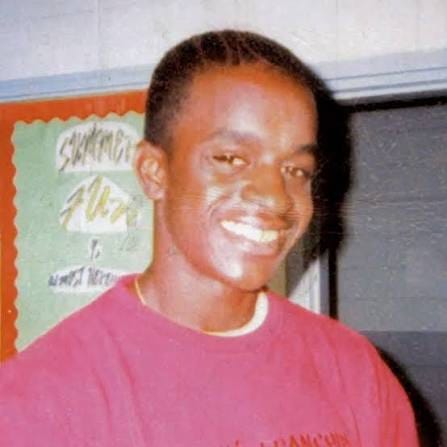
THEY BURIED RAYNARD. PULL HIM BACK OUT OF MISSISSIPPI’S LIE.
Mississippi buried Raynard Johnson’s death the moment it happened in 2000; turned a suspicious hanging in his own front yard into paperwork, slapped “suicide” on a story that never matched the context, and walked away like the case was settled.
They didn’t “struggle” with the conclusion. They didn’t “debate” it. They didn’t “investigate” anything. They buried it. Flat‑out.
Your job now is simple: drag this case back into the light. Push his name. Push the contradictions. Push the context Mississippi erased. Push the questions they never answered because answering them would expose the pattern they’ve been running for decades.
White silence is how Mississippi disappears Black children. Visibility is how you break their grip. They already buried Raynard. Don’t let them keep him there.