


I’ve been telling y’all for a minute that the North ain’t clean. Folks love to act like lynching is some “Southern problem,” like racism packs up its bags and refuses to cross the Mason‑Dixon line. But last year, I elevated Torrance Medley’s case because the lynching pattern was already clear: it wasn’t regional; it was national. And today, I’m officially adding him to The Subtracted.
Because what happened to Torrance in Brookfield, Wisconsin ain’t an isolated tragedy. It’s a textbook example of how the state handles Black death: fast conclusions, missing evidence, contradictions they refuse to explain, and a community forced to investigate what the police won’t.
The Story They Keep Trying to Flatten
Torrance Medley was a 39‑year‑old Black man living in Milwaukee. On November 13, 2025, he was found hanging from a tree at a golf course in Brookfield. Brookfield is an affluent, mostly white suburb nearly two hours away from where Torrances lived. No car. No ties to the town. No business at that golf course. Nothing that explains why he would be there.
Police rushed to call it a suicide, because of course they did.
The “autopsy’’ rubber‑stamped that narrative.
Then they left the case “open,” with no intention of doing a damn thing.
They claim the video shows “no evidence of a crime.” And if that’s true — if it’s really just empty footage as CMPD swore in Juliana Nzita’s case — then show it. Because every time they say “there ain’t nothing to see,” they somehow refuse to let anybody fucking see it.
They won’t answer basic fucking questions. They won’t explain the damn timeline. They won’t address the contradictions. They won’t acknowledge the community’s distrust because acknowledging it would require accountability.
And accountability is the one thing they never volunteer.
The Contradictions They Hope We Don’t Name Out Loud
Let’s talk about the contradictions, because they’re loud, messy, and impossible to ignore.
Police say Torrance took a bus to Brookfield, then back to Milwaukee two days before his death. Then he returned to Brookfield on November 12, the day before he was found dead. They treat this like it’s normal. Like a Black man with no ties to an affluent white suburb routinely travels there twice in three days for no damn reason.
They say the video supports suicide because “no one murdered him on camera.” That ain’t fucking evidence. Given the history of police involvement in lynching in this country, why the fuck would anyone take their word for anything? Fuck that. Show the footage.
They say his feet were touching the ground and he was hunched, but refuse to explain how that positioning supports suicide. They won’t answer questions about the mechanics. They won’t explain the physics. They won’t address the fact that the scene doesn’t match their fucking conclusion.
They called it suicide within hours, before the medical examiner even performed an autopsy.
Visual inspection.
Stamp.
Move on.
They say nothing about why Torrance’s identification and cellphone are missing. Why would a man planning to kill himself toss his ID and phone somewhere else first? Why would he intentionally make himself unidentifiable?
They say nothing about the location disconnect (a Black man with no car, no ties, no business, no reason) found dead in a wealthy white suburb he had no connection to.
They say nothing because they don’t want to.
They say nothing because they are covering up a hate crime.
The Pattern They Keep Pretending Ain’t There
Torrance’s case fits the same damn pattern we’ve been naming with Keith Warren in Silver Spring, Maryland, and Juliana Nzita in Charlotte, North Carolina. Different states, different decades, same playbook. The police walk up, take one look at a Black body, and perform what they love to call a “visual inspection.” No investigation. No timeline. No logic. Just a glance and a verdict.
And here’s the factual part people need to stop fucking ignoring: Police ain’t qualified to determine suicide. They ain’t medical examiners. They ain’t forensic pathologists. They do not have the training, certification, or legal authority to make a cause‑of‑death ruling. Their job is to investigate, not diagnose.
But in all three cases, they skipped the investigation and jumped straight to the diagnosis.
Keith Warren was labeled a suicide off a visual inspection; despite being found wearing clothes he didn’t own, clothes his family had never seen before. That alone should’ve triggered an investigation, not a damn conclusion.
Torrance Medley was labeled a suicide off a visual inspection; with contradictions the police refuse to explain, missing items they refuse to account for, and a timeline they refuse to clarify.
Juliana Nzita (16) was labeled a suicide off a visual inspection; and they hid the footage that supposedly showed “nothing.” Nothing. The motion‑activated 360‑degree surveillance camera covering the area where she was found hanging somehow captured “nothing pertinent.” And instead of releasing that “nothing,” they buried it.
Three Black people.
Three different states.
Two different decades, almost forty years apart.
Same damn pattern: the state decides how a Black person died before they even bother to investigate how they lived.
Keith, Torrance, and Juliana were swallowed by a system that keeps choosing speed over truth, convenience over accountability, and narrative designed to protect white violence.
How to Move on Torrance’s Case
Add Torrance to your community command center. Right fucking now. He belongs under:
“Black Hangings Labeled Suicide Without Investigation.”
or
“Cases With Contradictory State Narratives and Withheld Evidence.”
And here’s how to move:
Report to Brookfield Police Oversight Bodies: Demand transparency about the timeline, missing items, and surveillance footage. Oversight bodies track patterns of misconduct, and this case fits the criteria.
Contact the Milwaukee County Medical Examiner’s Office: Request clarification on the autopsy findings, especially given the physical contradictions at the scene. Ask for documentation on how they reached their conclusion.
Reach Out to Wisconsin DOJ Civil Rights Division: They handle cases involving potential civil rights violations and discriminatory policing. Torrance’s case qualifies for review.
Notify Reproductive Justice and Anti‑Lynching Advocacy Groups: Groups tracking racialized violence need to know this case exists. They can amplify, investigate, and apply pressure.
Document Everything: Screenshots, dates, statements, contradictions, missing items, unanswered questions. Documentation is leverage.
If threats or harassment emerge: Report them to cybercrime portals and local law enforcement. Incitement and intimidation tied to cases like this are taken seriously, and should be.
Y’all, we ain’t overreacting.
We are protecting the community.
We are holding the state accountable.
We are refusing to let them bury another Black man under a rushed narrative.
The Weight of The Subtracted; And Why I Keep Carrying It
The Subtracted ain’t a blog. It ain’t commentary. It ain’t content. It’s a ledger of what this country keeps taking from us, and keeping that ledger accurate costs me something every single time. Adding Nolan ain’t just another entry; it’s another weight. Another wound. Another reminder of how violently this country treats Black life and how much work it takes to document that violence honestly.
Every case means hours of digging, verifying, cross‑checking, and pulling apart contradictions these states hope nobody notices. It means reading autopsies that don’t make sense, timelines that don’t add up, statements that contradict themselves, and rulings that tell you exactly how little Black life matters to the machinery that’s supposed to protect it. It means sitting with the grief of families who will never get answers. It means absorbing trauma that ain’t mine but becomes mine because I’m the one carrying it into the light.
The Subtracted takes time. It takes energy. It takes emotional bandwidth. It takes mental health. It takes sleep. It takes peace. It takes pieces of me I don’t get back. And I keep doing it because mainstream media won’t. Because the state won’t. Because somebody needs to build a public record of the Black people this country keeps subtracting. Because if I don’t write these stories, they disappear; and Mississippi counts on that.
I keep The Subtracted free because these stories need to stay visible. They need to stay accessible. They need to stay in the public eye. But free doesn’t mean costless. Free means I’m paying the cost so you don’t have to. And that cost is getting heavier.
If you want this work to continue; if you want Torrance story documented, archived, and refused; if you want these cases investigated, mapped, and exposed; if you want The Subtracted to stay alive, I need support. Not because I’m fragile. Not because I’m overwhelmed. But because this work is bigger than one person, and the toll is real.
I’m going to drop a link to where The Subtracted lives. I’m also going to add a “Support the Project” button. Separate. Clear. Intentional.
Because The Subtracted is the work, and supporting it is how you help carry the weight.
Rest in Power, King
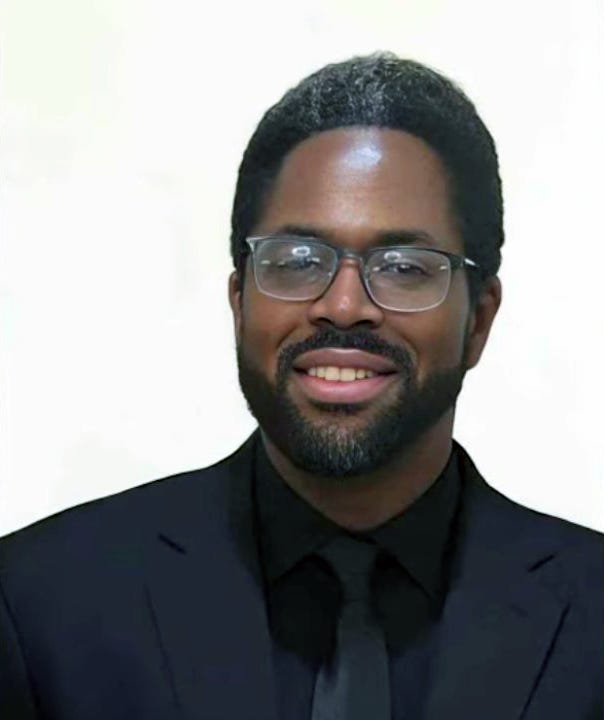
Torrance Medley was a 39‑year‑old Black man found hanging from a tree in Brookfield, Wisconsin, in 2025. His death was ruled a suicide within hours, based on a visual inspection, with no real investigation, no transparency, and no respect for the truth. Brookfield withheld answers, withheld the timeline, withheld the footage, and left his family and community to piece together what the police refused to. That’s why people have to keep talking about Torrance. That’s why his name has to stay loud. Justice doesn’t expire, y’all. The truth doesn’t disappear. And it is never too late to fight for Torrance Medley. Share his story. Share his photo. Keep his name moving.

Jackie I have online support coming for you as soon as I finish a writing assignment after the midterms. Keep up your excellent work! Woman Power!! ✊🏼I can NEVER be a black or brown in this lifetime, but I can die supporting them! TY. 🙏 EpicB 💕